
Reviewed · ESCAPE ROOMS & MYSTERY GAMES
2 Hours Escape Room A Knight To Escape
Stonebury Castle turns an escape room into a team relay. You’ll get split between the dungeon and the courtyard, tackling tasks from different spaces while trying to free your whole group from the shackles inside the walls. It’s a two-hour adventure set up with the medieval feel of knights vs. prisoners.
What I like most is the way the game forces real coordination. Second, the experience leans hard into theming and set design, so it feels like you’re in a castle rather than staring at blank props. One thing to consider: with split teams, you can spend time waiting while the other side works on their part, and a few people found hint timing a bit slow.
In This Review
- Two key things I’d bet on (and one thing to watch)
- Quick hits before you go
- Entering the castle: where to start and how to set expectations
- The 2-hour rhythm: how the split start works in practice
- What feels great
- What can feel frustrating
- Dungeon vs. courtyard: puzzle layout, roles, and why communication matters
- Puzzles, flow, and the “are we missing something?” factor
- My practical take on how to play it smarter
- Game master and clue timing: the hint process can make or break it
- What to do if you like guidance
- Price and value: is $69.95 per person fair for a 2-hour castle escape?
- Comfort tips: cold rooms, teamwork, and what to pack
- Who this escape room fits best in Orlando
- Should you book A Knight To Escape in Orlando?
- FAQ
- How long is A Knight To Escape?
- How much does it cost?
- Where is the meeting point?
- Is it a private experience?
- Are service animals allowed?
- What should I know about tickets and confirmation?
Two key things I’d bet on (and one thing to watch)
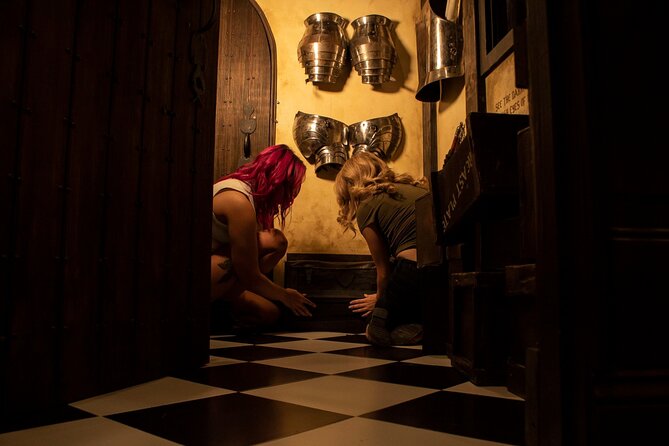
I like the split-start concept because it rewards clear communication instead of one person solving everything. I also like that the room is built for atmosphere—people call out the look, feel, and overall craftsmanship.
The drawback is pacing. If both halves don’t move in sync, you may feel stuck watching a clock while your side waits for the other half to trigger progress.
Quick hits before you go
- Split dungeon and courtyard gameplay: you won’t be in one room solving everything at once
- Communication is the main tool: teamwork matters as much as puzzle skill
- Hint requests use a button: you may see messages like the host will be with you shortly
- Theme and set design are a big part of the appeal: the castle environment gets strong praise
- Plan for comfort issues: multiple comments note the rooms can feel cold
- Difficulty can be steep: at least one player described it as close to a 9 out of 10
Locked-room games for a break from the parks
- The Escape Game Orlando: Epic 60-Minute Adventures on I-Drive★ 5.0 · 730 reviews
- The Asylum Escape Room★ 5.0 · 72 reviews
- America’s Escape Game: Crisis at 1600★ 4.5 · 47 reviews
- At Odds With The Gods 90 Minute Escape Room★ 5.0 · 25 reviews
Entering the castle: where to start and how to set expectations
Your meeting point is 11701 International Dr, Orlando, FL 32821 and the experience ends back there. The duration is listed as about 2 hours, so mentally, I’d treat this like a proper activity block in the middle of your day—not a quick add-on.
You’re also using a mobile ticket. That’s helpful because it keeps your check-in simple, and it avoids the usual hassle of printed paper or scanning trouble at the last second. If you’re traveling with kids or multiple people, I’d still plan to have one phone ready with the ticket up front.
Because this is a private tour/activity for your group, you’re not sharing the experience with strangers in the same room. That’s a good fit if you want your group’s communication to stay tight—especially in a puzzle format where you need to coordinate across spaces.
The 2-hour rhythm: how the split start works in practice
The core idea is simple, but it changes how you play: your team is split between two areas—the dungeon and the courtyard. Your roles align to the story: you’re either common prisoners trying to break free or courageous knights rescuing teammates.
In a lot of escape rooms, everyone crowds into the same area and works one shared puzzle chain. Here, the structure is different. You can expect a repeating pattern where one side works on what they’re responsible for, then your results get passed to the other side to keep the clock moving.
That relay structure is exactly why the experience is described as the longest escape room in Florida. The goal isn’t just solving; it’s solving at the same time as your other half is working toward their part.
What feels great
When the relay clicks, the split format can feel tense in a good way. Groups that love escape rooms tend to enjoy the teamwork element—because you can’t brute-force your way through. You need to communicate what you’ve found, not just what you think it means.
What can feel frustrating
If one side finishes slower, you can feel like your progress depends on something you can’t speed up. One common complaint is that players spent noticeable time waiting for the other side to do something helpful. Even a couple minutes feels longer when you’re racing the countdown.
Dungeon vs. courtyard: puzzle layout, roles, and why communication matters
Your two spaces aren’t just different locations. They’re different working conditions. One side can feel more dim or harder to see in, and one report mentions a light source problem on their side. That’s not guaranteed—but it’s a strong reminder to come ready to work with imperfect visibility.
Here’s the real gameplay challenge: you must stay connected while you’re physically separated. That means:
- describing what you see clearly (where a clue is, what shape/label it has, what you already tested)
- agreeing on the next step quickly instead of debating for long stretches
- requesting help when you’re truly stuck, not just when you’re curious
This is also where pacing differences show up. If your side is ready to move forward while the other side is still searching, you’ll feel the mismatch. If your side is the one still working, you’ll want to avoid wandering into long guesswork that doesn’t lead anywhere.
Other Orlando tours and experiences we have looked at


Puzzles, flow, and the “are we missing something?” factor
The experience has multiple puzzles across the two-hour run, and set design gets real praise. People highlight that it feels well built, with medieval visuals that support the story.
That said, there’s a split in how puzzle quality lands. Some players loved the puzzle variety and said the teamwork and communication were a must. Others felt puzzle flow was weak—puzzles didn’t always fully make sense after solving, and some puzzle steps were confusing or led to too many configuration attempts.
If you’re the type who needs the puzzle chain to feel clean and intuitive, I’d take that seriously. When puzzle logic is vague, you can burn time trying options that don’t connect clearly to the intended solution. And because you’re split, wasted minutes don’t just slow you down—they can leave you waiting while the other half catches up.
My practical take on how to play it smarter
- Treat every clue as data, not as a guess. If you can’t translate it into a next action, ask for help earlier rather than later.
- Make sure both halves track what’s solved and what’s not. Passing items without context can create extra confusion.
- If your group is strong at communication but weaker at mechanics, lean into talking through possible meanings quickly so you don’t spin in place.
Game master and clue timing: the hint process can make or break it
Hints come into play through a request button, and one of the messages players reported is the host will be with you shortly. The issue isn’t that hints exist—it’s how quickly and how actively a game master intervenes.
Some players describe staff as courteous and helpful with clues. Others feel the game masters don’t watch continuously; they only step in when you press for hints. That design choice can work well for experienced groups who like to earn progress. But if you’re prone to exploring the wrong path for a long time, it can feel like no one is guiding you back to the intended route.
What to do if you like guidance
If your group is more comfort-seeking than puzzle-stubborn, I’d recommend using hints sooner. Waiting out 3 or 4 minutes can be painful when the room is time-pressured—and several comments specifically call out clue waits.
Price and value: is $69.95 per person fair for a 2-hour castle escape?
At $69.95 per person for about 2 hours, this isn’t a budget escape room. You’re paying for:
- the longer format (time investment)
- the split layout (more complex logistics)
- the set design and theme
- a private setup for your group
When it works well, you get a full, two-hour activity with a real medieval environment and a puzzle challenge that pushes communication. That’s the “value” side.
When it doesn’t, the value equation changes. If you end up spending a lot of time waiting, or if puzzle flow feels confusing, the price can start to feel steep compared with Orlando’s other escape-room options. One critical takeaway is that some players felt there weren’t enough distinct puzzle moments and that too much time was spent on configurations that didn’t feel intuitive.
So here’s my balanced verdict:
- If your group loves communication-heavy escape rooms and enjoys being challenged, it can feel worth the cost.
- If your group hates waiting and you want constant guidance, you should approach with care.
Comfort tips: cold rooms, teamwork, and what to pack
One detail that comes up clearly: the rooms can be freezing. That matters because you’ll spend two hours solving while standing, leaning, and moving around. Wear layers. I’d bring a hoodie or light jacket you can keep on without being a distraction.
Also, because you’re split, choose shoes that let you move comfortably between areas if you need to reset positions or reach different puzzle stations. There’s no mention of special equipment—so common-sense comfort matters more than gear.
Lastly, go in with your team ready to talk. If you bring a group that communicates poorly, a split format can turn into stress. The castle story looks great, but the mechanism is still human: you win by sharing information fast.
Who this escape room fits best in Orlando
This one is best for:
- Escape room regulars who like a real challenge and can handle being separated into roles
- Families and groups that enjoy problem-solving together and stay upbeat
- Teams that don’t mind waiting a bit as long as they can keep talking and strategizing
You might want to reconsider if:
- Your group hates puzzle ambiguity and needs very clear logic chains
- You’re expecting a “game master constantly watching and steering” vibe
- Your group gets frustrated by time pressure when one half is waiting for the other half
Should you book A Knight To Escape in Orlando?
I’d book it if you want a themed, split-team escape room experience where communication is part of the puzzle. The set design and castle feel are strong selling points, and when the relay structure clicks, it can be genuinely fun for escape-room lovers.
I’d think twice if $69.95 per person feels like a stretch and you’re sensitive to pacing. With split gameplay, waiting is baked in, and hint timing may not feel instant. If your ideal escape room is fast momentum with constant nudges, there are probably other options in Orlando that better match that style.
If you do go, come layered for the cold, keep your team talking, and request a hint when you’re truly lost—not when you’re just hoping the next guess will magically connect.
FAQ
How long is A Knight To Escape?
It runs for about 2 hours.
How much does it cost?
The price listed is $69.95 per person.
Where is the meeting point?
The meeting point is 11701 International Dr, Orlando, FL 32821, USA.
Is it a private experience?
Yes. It’s listed as a private tour/activity, meaning only your group participates.
Are service animals allowed?
Yes. Service animals are allowed.
What should I know about tickets and confirmation?
You receive confirmation at booking, and the experience uses a mobile ticket. The activity is also described as near public transportation.
A Couple of Hours Free
- Rock Springs 2-Hour Glass Bottom Guided Kayak Eco Tour
★ 5.0 · 2,459 reviews - 2 Hour Historical Wildlife Tour of the Chain of Lakes
★ 5.0 · 293 reviews - 2-Hour Clear Kayak and Paddleboard(SUP) Rental in Orlando
★ 5.0 · 91 reviews - Private 2-Hour Day Sailing Experience
★ 5.0 · 46 reviews - Private 2-Hour Sunset Sailing Tour on Lake Fairview
★ 5.0 · 34 reviews
More Orlando Tours From Our Desk
- Florida Everglades Airboat Tour and Wild Florida Admission with Optional Lunch
★ 5.0 · 2,576 reviews - Rock Springs 2-Hour Glass Bottom Guided Kayak Eco Tour
★ 5.0 · 2,459 reviews - Orlando: I-Ride Trolley Hop-on Hop-off Pass
★ 4.2 · 2,352 reviews - SeaWorld Orlando: Park Admission Ticket
★ 4.4 · 1,706 reviews - Orlando: Everglades Airboat Ride and Wildlife Park Ticket
★ 4.7 · 1,459 reviews
One More Room to Break Out Of
- The Escape Game Orlando: Epic 60-Minute Adventures on I-Drive
★ 5.0 · 730 reviews - The Asylum Escape Room
★ 5.0 · 72 reviews - America’s Escape Game: Crisis at 1600
★ 4.5 · 47 reviews - At Odds With The Gods 90 Minute Escape Room
★ 5.0 · 25 reviews - Orlando: The Escape Game Epic Adventure on I-Drive
★ 4.9 · 25 reviews
Just added: newer Orlando tours from our review desk





Escape Rooms & Mystery Games, compared.
 ★ 5.0The Escape Game Orlando: Epic 60-Minute Adventures on I-DriveFrom $46730 reviews
 ★ 5.0The Asylum Escape Room72 reviews
 ★ 4.5America’s Escape Game: Crisis at 1600From $3747 reviews
 ★ 4.9The Escape Game Epic Adventure on I-DriveFrom $4625 reviews
 ★ 5.0At Odds With The Gods 90 Minute Escape RoomFrom $5925 reviews
 ★ 5.0Sherlock Studies 75-Minute Escape RoomFrom $4921 reviews
 ★ 4.5Outdoor Escape Room in Orlando – Lake Eola Park AreaFrom $7516 reviews
 ★ 5.0Fright Before Your Eyes 90-Minute Escape RoomFrom $593 reviews
Browse the lists this tour appears in