
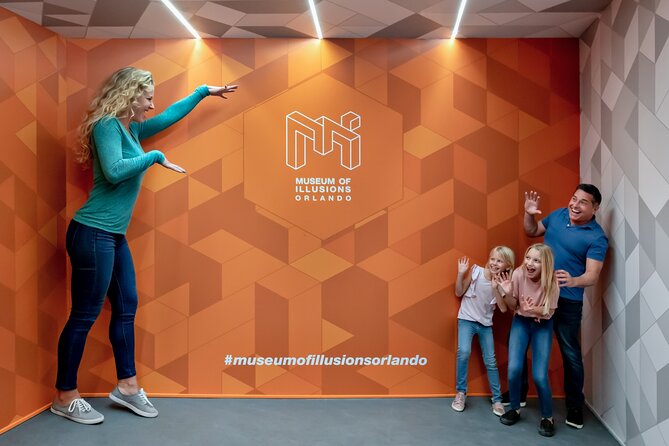
Reviewed · MUSEUMS & INDOOR ATTRACTIONS
Admission Ticket to Museum of Illusions Orlando
If your eyes start arguing with your brain, you’re in the right place. The Museum of Illusions at ICON Park turns that feeling into a walk-through of interactive, photo-friendly brain tricks.
I especially like how many chances you get for hands-on moments, not just passive viewing. And I like that it’s built for fast fun: you can plan a clean 1-hour stop without blowing up your whole day. The main drawback is that the experience can feel short—some people want more exhibits per dollar.
In practice, this kind of place works best when you slow down just a bit. Take time with the display explanations (the walls matter) and let the rooms reset your expectations. You’ll also want to respect motion-sensitive areas, because at least one exhibit can make some people feel dizzy.
Finally, this is a great “add-on” plan for Orlando. It sits inside ICON Park, with nearby food, bars, and other distractions if you want to keep the night going. Just go in knowing it’s a quick indoor activity, not a half-day museum marathon.
In This Review
- Key things to know before you go
- Museum of Illusions at ICON Park: what you’re really buying
- Stop 1: ICON Park arrival and the easiest way to plan your night
- Stop 2: walking into the Museum of Illusions in a good mood
- The big rooms: Infinity, Reverse, and Ames (and how to enjoy them)
- Infinity Room: go slow and find your angle
- Reverse Room: embrace the pose
- Ames Room: small-scale fun
- Photo opportunities without the chaos: staff help and your best timing
- How long does it take really? Why 1 hour can feel perfect or too short
- What to do first (so you don’t miss the good stuff)
- Motion and dizziness: the one caution I’d actually take seriously
- Price and value: is $30.87 a fair deal?
- Who should book this Museum of Illusions ticket?
- Should you book? My practical call
- FAQ
- How long does the Museum of Illusions Orlando visit take?
- What’s included with the admission ticket?
- Is the ticket mobile or paper?
- Are service animals allowed?
- Can I cancel and get a full refund?
- Where is the museum located?
Key things to know before you go

- Prebooked, timed entry helps you avoid long lines and keeps the flow moving
- Over 50 interactive exhibits mean lots of hands-on chances in a compact building
- Photo-first design turns you into part of the illusion (poses encouraged)
- Standout rooms include the Infinity Room, Reverse Room, and Ames Room
- A short visit is normal—plan around roughly an hour, not two
- Motion sensitivity note: some visual experiences can cause dizziness for certain people
Museum of Illusions at ICON Park: what you’re really buying
This ticket is simple: you’re paying for entry to an indoor, hands-on “edutainment” space where your body and eyes do the work. Instead of quiet galleries, you get rooms that ask you to stand in a spot, move a little, and test what you think you’re seeing. It’s brain science presented like a game.
At $30.87 per person for about 1 hour, value comes from your expectations. If you want a quick, laugh-out-loud indoor break with lots of photos, it can feel like a fair trade. If you expect a large museum-style experience with nonstop new content, you may end up wishing it lasted longer.
The ticket also earns points for convenience. You get a mobile ticket, and it’s attached to a scheduled time window. That matters in a place like ICON Park where foot traffic can spike.
Rain-day picks: WonderWorks, Titanic and the illusion rooms
- WonderWorks Orlando★ 4.5 · 999 reviews
- Admission Ticket to Museum of Illusions Orlando★ 4.5 · 477 reviews
- Titanic : The Artifact Exhibition Ticket in Orlando★ 4.5 · 444 reviews
- Orlando: Titanic Artifact Exhibition Ticket★ 4.5 · 246 reviews
Stop 1: ICON Park arrival and the easiest way to plan your night
The Museum of Illusions is in the heart of ICON Park. That’s not just geography trivia—it changes how you build your schedule. When your timed entry is done, you’re already surrounded by places to eat, hang out, and keep the evening from feeling like a one-stop detour.
ICON Park is known for the big “scene” stuff nearby, including a giant Ferris wheel, plus things like an arcade and even a wax museum in the area. So you can do this as a main event, or as the indoor anchor while you and your group wait for dinner time.
Practical tip: because your admission is timed, you don’t want to wander around for 90 minutes before you’re supposed to go in. Aim to arrive with enough buffer to find the museum entrance, check in smoothly, and still start your session without stress.
Stop 2: walking into the Museum of Illusions in a good mood
Inside, the vibe is playful and welcoming. The setup is built around repeated “aha” moments, where you get to see how the trick works and then try it again with a different angle. This is one of those experiences where staff support can make a real difference, especially for couples and families trying to get photos in the right spot.
You’ll see exhibit areas designed for interaction, including spots where you become part of the illusion. There’s also a strong “science behind it” angle—basically, the museum wants you to understand the brain mechanics behind the trick, not just be fooled.
I also like that it’s independent. You can explore at your own pace. That flexibility is useful when you have mixed ages or different comfort levels with photo staging.
The big rooms: Infinity, Reverse, and Ames (and how to enjoy them)
The museum experience is organized around signature rooms that are easy to recognize and fun to revisit.
Infinity Room: go slow and find your angle
The Infinity Room is where you walk through a mind-bending sense of space. The effect is all about perspective, so your best results usually come from moving carefully and pausing to let your camera angle catch up with what your eyes think is happening. If you rush, you’ll miss the “wait, that’s impossible” moment.
This room tends to work for almost everyone because it’s not about gravity or scale—it’s about distance and depth, which your brain interprets in creative ways.
Reverse Room: embrace the pose
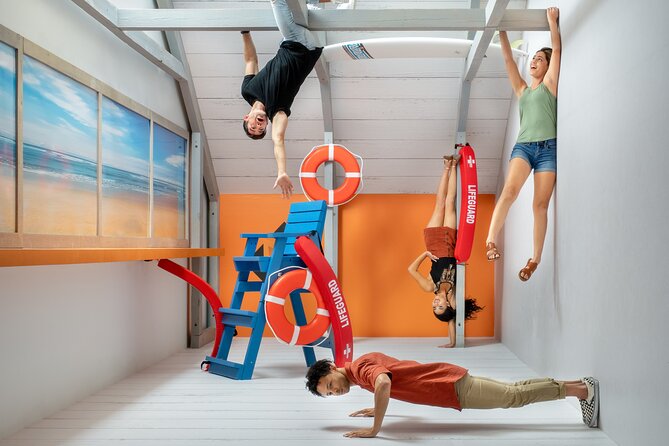
The Reverse Room is the gravity-defying section. The idea is simple: the visual setup makes you look like you’re acting against normal physics, even though the trick is controlled. This is a great room for pairs and friends because it’s naturally pose-based—you’ll want at least a few photos where you look like you’re doing something dramatic.
One consideration: motion or disorientation can bother some people in places like this. If you’re someone who gets queasy with visual tricks, take your time, stop if needed, and don’t force the “perfect” shot.
Bundles and city passes that stack a few Orlando days together





Ames Room: small-scale fun
The Ames Room is designed to make you feel like you’re shrinking to miniature size. These are the kinds of optical illusions that make the camera do the work. You don’t need special skills—just good timing and a willingness to stand where the illusion wants you.
If you’ve ever seen people looking like they’re holding someone gigantic or tiny, this is the kind of room that creates that effect.
Photo opportunities without the chaos: staff help and your best timing

Let’s talk photos, because this place is built for them. You’ll likely spend more time than you expect getting positions right—especially if you’re in a group where people want their own angle.
A big positive from the experience is that staff often help with setup. Some visitors note that staff members take pictures to help you get the best shot, which is huge when you’re traveling without a dedicated camera buddy. You’ll also find helpful guidance around how to position yourself, particularly in the more popular photo rooms.
Still, you should plan your visit with patience in mind. Popular exhibits can slow your path, and groups sometimes bunch up while everyone waits for their turn. If you’re trying to do it fast, you can do that—but you’ll want to give yourself a few extra minutes for the rooms that naturally create the “everyone wants a turn” effect.
Also, keep an eye out for instructions near camera/photo spots. In one case, visitors mentioned that some spots didn’t have clear signage like a camera sticker, so it wasn’t obvious where to take a photo for the intended effect. If you don’t see what you’re supposed to do, don’t guess wildly—pause and look for the next clue on-site.
How long does it take really? Why 1 hour can feel perfect or too short

The museum is listed at about 1 hour. In the real world, that time can flex.
Some people end up seeing everything in 30–45 minutes, especially if they’re moving quickly and not repeating photo moments. That can be great value for an indoor stop. But it can also explain why some guests feel the price is a bit steep if they expected a longer walkthrough or more exhibits.
Here’s the balanced way to think about it:
- If you love quick, interactive challenges and you’re mainly there for the rooms and photos, you’ll likely feel satisfied.
- If you prefer slower museum pacing—reading every explanation and taking lots of time in each station—you might want to pair this with other nearby ICON Park activities so your overall outing feels fuller.
My advice: treat it like a focused chapter in your Orlando day. Then add a second chapter nearby. That way the total experience feels like “a plan,” not a rushed checklist.
What to do first (so you don’t miss the good stuff)
Because this museum is interactive and photo-driven, your first 10 minutes shape the whole visit. Here’s how I’d pace it:
First, start with the signature rooms early when the energy is high. If you wait until later, you may run into longer lines for the rooms that people rush to photograph. Then, circle back for the smaller exhibits and hands-on stations when the crowd shifts.
Second, don’t only chase the big rooms. The more subtle exhibits and visual setups can be just as fun when you read what they’re trying to teach. Some visitors specifically recommend taking time with the displays on the walls, not just walking room to room.
Third, if you’re with kids, set a simple expectation. This is short-fun science. Tell them you’re doing a “mission” to complete the main rooms, then you’ll slow down for extra photos if everyone’s having fun.
Motion and dizziness: the one caution I’d actually take seriously

One review highlights that a purple tunnel with lights can cause dizziness or make some people feel sick. That’s a real enough warning that I’d plan around it instead of ignoring it.
If you know you’re sensitive to motion, flashing lights, or strong visual effects, go slowly through any high-stimulation areas. Take breaks. If a moment feels wrong for your body, skip it. You’re not proving anything here. You’re enjoying yourself.
A related note: a colourful spinning wheel moment was also mentioned as a memorable highlight. That kind of rotating visual experience can be thrilling or overwhelming depending on the person—so it’s worth keeping an eye on your own comfort level as you go.
Price and value: is $30.87 a fair deal?
Let’s be honest: at $30.87 per person, you’re not buying a bargain ticket. You’re buying a timed, ticketed experience that’s designed to be fun and photo-friendly, not a massive multi-hour museum.
So what makes it worth it?
- You get prebooked entry that reduces the line stress
- You get interactive exhibits (many people say the best part is being able to touch and try)
- You get strong photo opportunities in recognizable rooms like Infinity, Reverse, and Ames
- You get an indoor plan that’s easy to fit into a busy Orlando itinerary
When it might not be worth it:
- If you expected a bigger museum footprint
- If you’re not into staged photos and mostly want long reading/quiet exhibits
- If you hate crowds and are traveling at peak times (timed entry helps, but it’s still ICON Park)
For best value, book it as part of an evening or day that already has other nearby plans. Then your total cost-per-hour of fun feels more balanced.
Who should book this Museum of Illusions ticket?
This experience fits best if you:
- Want a quick indoor activity that works for families and couples
- Like science that explains itself through fun rather than lectures
- Want lots of photos without needing a tripod and a photo course
- Prefer a clear time commitment of around an hour
It’s also a good choice if your group includes different ages. The museum’s interactive style can hold attention better than a traditional museum. Kids and teens often get the most out of it when they can touch, test, and try again.
Who might skip it:
- People looking for a long, museum-like deep walk
- Visitors who don’t care about photo ops and would rather spend time reading or exploring large collections
Should you book? My practical call
I’d book this ticket if you want a friendly, interactive, photo-driven indoor stop near the action of ICON Park. The experience is quick enough to slot into a busy Orlando day, and it has enough interactive exhibits to keep most people smiling. The combination of hands-on rooms and staff support with photos is a big part of why it works.
I would also keep your expectations tuned: this isn’t a full-day museum. If you go in expecting a compact adventure that peaks with the signature rooms, you’ll feel the value. If you go in expecting endless new exhibits, you might feel shorted by the time.
If your group is excited to be fooled—by your eyes, by your camera angles, and by your brain—this is an easy yes.
FAQ
How long does the Museum of Illusions Orlando visit take?
It’s listed as about 1 hour (approx.). In practice, some people complete it in roughly 30–45 minutes, while others take a bit longer depending on how many photo moments they repeat.
What’s included with the admission ticket?
Your ticket includes the admission to the Museum of Illusions. It also includes all fees and taxes.
Is the ticket mobile or paper?
This experience uses a mobile ticket. You’ll receive confirmation at the time of booking.
Are service animals allowed?
Yes, service animals are allowed.
Can I cancel and get a full refund?
Yes. You can cancel up to 24 hours in advance for a full refund. If you cancel less than 24 hours before the start time, the amount you paid won’t be refunded.
Where is the museum located?
The museum is located at ICON Park in Orlando. It’s an indoor attraction inside that park area, alongside bars and restaurants.
More Orlando Tours From Our Desk
- Florida Everglades Airboat Tour and Wild Florida Admission with Optional Lunch
★ 5.0 · 2,576 reviews - Rock Springs 2-Hour Glass Bottom Guided Kayak Eco Tour
★ 5.0 · 2,459 reviews - Orlando: I-Ride Trolley Hop-on Hop-off Pass
★ 4.2 · 2,352 reviews - SeaWorld Orlando: Park Admission Ticket
★ 4.4 · 1,706 reviews - Orlando: Everglades Airboat Ride and Wildlife Park Ticket
★ 4.7 · 1,459 reviews
Passes That Bundle the City
- SeaWorld Orlando: Park Admission Ticket
★ 4.4 · 1,706 reviews - Orlando: Everglades Airboat Ride and Wildlife Park Ticket
★ 4.7 · 1,459 reviews - LEGOLAND Florida Theme Park Admission Tickets
★ 4.0 · 1,434 reviews - Universal Orlando Park to Park Tickets – USA / Canada Residents
★ 3.5 · 1,002 reviews - Orlando: Orlando Magic NBA Basketball Tickets
★ 4.8 · 682 reviews
Indoor Days and I-Drive Museums
- WonderWorks Orlando
★ 4.5 · 999 reviews - Titanic : The Artifact Exhibition Ticket in Orlando
★ 4.5 · 444 reviews - Orlando: Titanic Artifact Exhibition Ticket
★ 4.5 · 246 reviews - Titanic: First Class Dinner Gala Tickets in Orlando
★ 4.0 · 219 reviews - Orlando: Museum of Illusions Admission Ticket
★ 4.4 · 218 reviews
Just added: newer Orlando tours from our review desk





Museums & Indoor Attractions, compared.
 ★ 4.5WonderWorks Orlando999 reviews
 ★ 4.5Titanic : The Artifact Exhibition Ticket in OrlandoFrom $34444 reviews
 ★ 4.5Titanic Artifact Exhibition TicketFrom $36246 reviews
 ★ 4.0Titanic: First Class Dinner Gala Tickets in OrlandoFrom $89219 reviews
 ★ 4.4Museum of Illusions Admission TicketFrom $31218 reviews
 ★ 4.0Crayola Experience Orlando TicketFrom $32145 reviews
 ★ 4.7WonderWorks Nighttime Entry TicketFrom $2764 reviews
 ★ 4.5Orlando Auto Museum at Dezerland Park OrlandoFrom $3156 reviews
Browse the lists this tour appears in